In Partnership with
Canada’s unfinished debate over independent advice
Designed’s Michael Konopaski, PEAK’s Robert Frances, and Verecan’s Ainsley Mackie discuss why independent advice now rises or falls on infrastructure, not intent

Robert Frances
PEAK Financial

Industry experts

Michael Konopaski
Designed Securities

Ainsley Mackie
Verecan
Robert Frances is the president and CEO of PEAK Financial Group, one of Canada’s leading independent full-service wealth management firms, overseeing more than $18 billion in AUM and empowering over 1,500 advisors nationwide. Since founding PEAK in 1992, he has been a driving force behind true advisor independence and ethical, client-centred leadership in financial services. A respected voice in Canada’s financial industry and a member of the board of directors of the Canadian Investment Regulatory Organization (CIRO), Robert continues to shape the future of advice. Beyond finance, he founded Music Is Medicine, a movement that unites artists and communities to raise funds for brain cancer research, reflecting his deep belief in purpose-driven impact.
PEAK Financial
Robert Frances
Michael Konopaski is the managing director of Designed Securities and brings 30 years of experience in building and leading investment dealers across Canada and the US. As a former portfolio manager and CPA, he provides strategic direction and guidance to advisors as they develop and grow their practices.
�Michael is the founder of the IIAC Small and Independent Dealer Committee. He has served as vice-chair of the CIRO Financial and Operations Advisory Section and is currently on the CIRO Ontario District Council. He holds a master’s in finance, a PhD in management, and the Certified Financial Planner (CFP®) and Chartered Investment Manager (CIM®) designations.�
Designed Securities
Michael Konopaski
Ainsley Mackie is a portfolio manager at Verecan Capital Management, where she provides discretionary investment management and advice to individuals, families, and business owners. She works closely with clients to simplify complex financial decisions, focusing on long-term discipline, clear communication, and unconflicted advice. Ainsley is part of a firm built deliberately outside traditional industry incentives, allowing her to act solely in clients’ best interests. She believes truly independent advice is defined not by labels but by structure, accountability, and the ability to put clients first without compromise.
Verecan
Ainsley Mackie
“When advisors have real freedom, they build stronger relationships, make better decisions, and deliver advice that truly serves clients”
Robert Frances,
PEAK Financial
Independent advice in Canada is no longer being tested from a single direction. It is being pulled from several at once.
�Dealers are expected to give advisors meaningful autonomy while also building businesses that can scale, withstand regulatory pressure, and remain financially sound. Advisors are expected to act solely in their clients’ interests while operating inside platforms shaped by custody constraints, capital requirements, and increasingly concentrated competition.
�Independence is talked about often, but it is far less often tested against how firms are owned, how revenue is generated, and where decision-making authority ultimately sits.�
“The hardest part of giving independent advice isn’t the advice. It’s explaining to clients that independence is actually the exception in this industry, not the norm”
Ainsley Mackie, Verecan
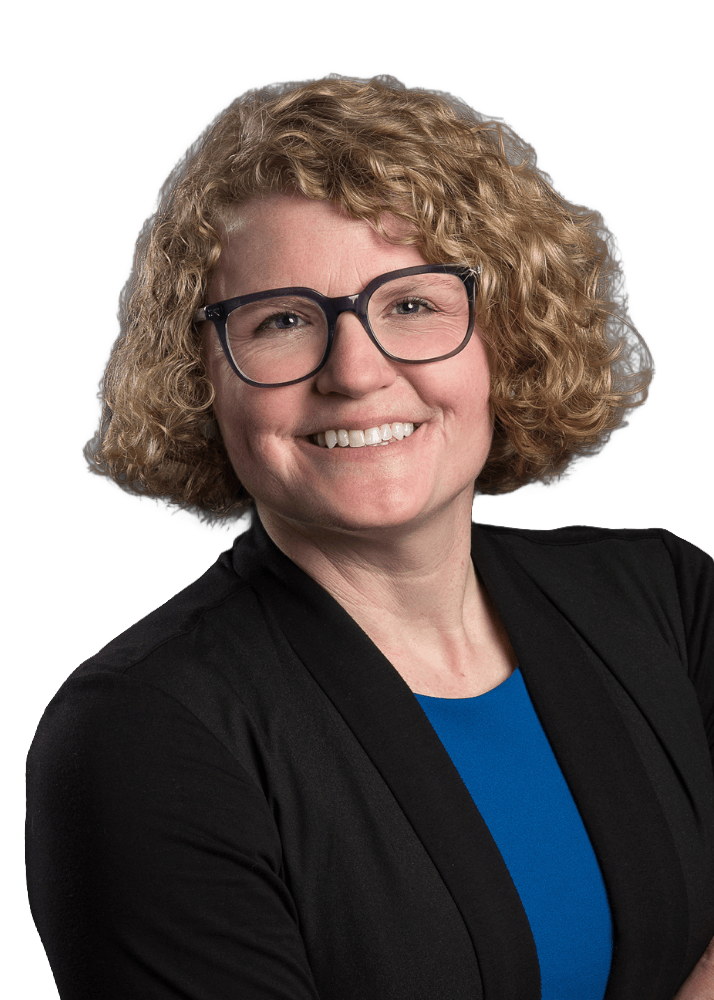
“While independence will always be a core value for us, I don’t think going forward it will matter as much that we’re independent but that we’re good and that we’re sound”
Michael Konopaski,
Designed Securities
Konopaski described the Canadian market as falling into three broad categories: bank-owned platforms, non-bank firms that still answer to external capital or product interests, and a smaller group that is fully independent in ownership and economics. The difference, he argued, shows up most clearly when advisors try to act in their clients’ best interests and discover where the real constraints lie.
�Frances described the trend more starkly, calling it the most serious threat facing independent advice today. “I like to call it fake independence,” he said. Popularity, in his view, has come at a cost. “Everyone wants to be like you. That means you’re onto something good. But you have to differentiate between �
The real pressure points�Against that backdrop, the influence of legacy financial institutions becomes harder to ignore. They are not simply competitors. They are structural forces that shape how advice is delivered in Canada.
�“The elephant in the room is that the Canadian bank oligopoly is gaining momentum,” Konopaski said. Their advantage is not just brand or scale. It’s control. “The stranglehold that the banks have on both custody of investments and transactional banking” sets the terms of competition, particularly at the higher end of the market.
That dynamic became more visible last year. “In 2025, the banks were winning and the independent dealer generally struggled,”
Those figures, Frances noted, are jarring for industry professionals who spend their days working with clients who are already planning, saving, and investing. They also point to a much larger reality: Most Canadians are not choosing between advisory models. They are not engaged with advice at all.
�As technology, artificial intelligence, fintech entrants, and new competitors converge, more people are being pushed to engage with their finances personally. That engagement, in turn, exposes complexity, and complexity creates demand for guidance.
�“Every day, there are more and more people becoming aware of the importance of taking their finances seriously,” Frances said. “And when they do, it slowly leads them to the need for an advisor.”�

These competing demands formed the backdrop of a recent Wealth Professional roundtable that brought together Robert Frances, chief executive officer of PEAK Financial Group; Michael Konopaski, co-founder and managing director at Designed Securities; and Ainsley Mackie, portfolio manager at Verecan Capital Management. The conversation moved quickly past branding and into structure. In Canada, independence only endures where it is deliberately designed into ownership, governance, and incentives.
�That framing matters because “independence” is not a regulated term in Canada. Firms can use it freely, even when their economics tell a different story. As Frances put it, “Almost everyone now says they’re independent. Independent of what, exactly, is often unclear.”�
Konopaski said. Independent platforms can grow, but they do so in an environment where custody, lending, and transactional relationships are already spoken for.
This is where the debate becomes less moral and more practical. Independence must coexist with soundness. “While independence will always be a core value for us,” Konopaski said, “I don’t think, going forward, it will matter as much that we’re independent but that we’re good and that we’re sound.” Independence without institutional credibility does not scale.
Staying out of the way takes work�A common misconception that surfaced during the discussion is that independent dealers succeed by staying out of advisors’ way. Frances rejected the idea that this is passive. “The dealers walk a fine line between staying out of their way and being right in their way with all the best tools to propel them,” he said.
�Operational excellence, in this context, is what makes independence workable. This includes systems that reduce friction, compliance processes that function efficiently, reporting that is accurate and usable, and technology that frees advisors to spend time with clients rather than paperwork.��
When independence loses its meaning�One of the clearest risks identified in the discussion was not external competition but dilution from within the industry itself.
�Firms with very different ownership structures, revenue sources, and incentive systems now present themselves in similar terms, making it harder for advisors and clients alike to distinguish between independence as a principle and independence as a marketing claim.
�That dilution of meaning is not just a communications problem. According to Konopaski, it creates a competitive imbalance that independent firms are forced to confront.
�“If you have to go upstairs or overseas to get approval for something, we don’t think you’re independent,” he said. “Voting control matters. Ownership matters. And whether you manufacture your own products matters.”�
true independence and fake independence. If you don’t take that threat seriously, it becomes existential.”
Mackie sees the consequences of that ambiguity play out with clients. “The hardest part of giving independent advice isn’t the advice,” she said. “It’s explaining to clients that independence is actually the exception in this industry, not the norm.”
�Mackie drew a parallel to the way ESG language spread through investment products long before standards caught up.
�The danger is not that independence disappears overnight. It is that the term becomes so elastic it stops signalling anything meaningful. When that happens, firms that have built independence into their structure lose a clear way to explain why they are different, and clients lose a reliable way to understand why those differences matter.�
Read on


Frances argued that such excellence is only achievable when firms avoid competing priorities. “I don’t see how that can be achieved if we become slaves to many masters,” he said. That is why PEAK avoids product manufacturing entirely. “We are quite passionate about not having any product,” he said, because it allows the firm to focus exclusively on serving advisors.
�Mackie reinforced this point from the advisor’s perspective. Independence is not experienced in mission statements, she noted. It is experienced in daily workflow. When systems work and reporting is reliable, advisors can focus on clients.
Growth without pretending the field is level�Despite the structural challenges, the panel dismissed the idea that independent growth is finished. They also rejected the idea that it looks like competing head-to-head with legacy institutions.
�For Frances, that opportunity lies not in competing for the same fully served clients but in recognizing how much of the market remains untouched. “The opportunity is much greater than we can even imagine,” he said. “I’m told about 60 percent of the population lives from paycheque to paycheque. They don’t have much in terms of savings. And less than 10 percent of the population has a hundred thousand dollars or more accumulated for retirement.”�
Konopaski echoed the point from a different angle. Independent growth, he suggested, comes from solving problems that large platforms are not built to address, whether that is regional under-service, cross-border complexity, or advisors who do not fit standardized models. Growth, in that sense, is emergent rather than engineered.
�Mackie framed the situation even more simply. As financial noise increases, the value of interpretation rises. Advisors are not competing with institutions so much as responding to a growing need for clarity.�
�
Designed Securities is an independent dual registered dealer that puts advisors at the centre of everything it does. Through its outstanding culture, and its commitment to collaboration and customization, it has become the advisor’s dealer. With maximum flexibility and support, Designed attracts advisors across the country, who want a dealer where they are free to be themselves. Designed is dedicated to working with advisors and understanding the needs of the clients they serve. They are a dealer where advisors can enjoy their work with clients and bring their best ideas forward, across a variety of needs.
PEAK is Canada’s leader of independent advice. For 33 years, PEAK has consistently pushed its limits, reaching a total of more than $16 billion in assets under administration.


Share


Published Jan 29, 2026

News
Regulators
People moves
Opinion
Industry News
Features
Advisor intel
ADVISOR INTEL
Wealth technology
Retirement solutions
Practice management
Investor Resources
Your Practice
Mutual funds
Life and health insurance
Global investing
Fixed income
ETFs
Equity markets
Alternative investments
iNVESTMENTS
Events
People profiles
Company profiles
E-magazine
WP Talk
White papers
Videos
Premium content
Resources
bEST IN WEALTH
Subscribe
Companies
People
Glossary
Newsletter
Terms of Use
Terms and Conditions
Authors
External contributors
About us
Contact us
Privacy
Cookie Policy
RSS

Copyright © 1996-2026 KM Business Information Canada Ltd.


Independence is a structural choice
Defined by ownership and control, not branding
Shaped by how revenue is earned
Limited by outside approval or influence
Felt in daily workflow, not philosophy
As PEAK’s Robert Frances notes, it holds only when advisor and client interests stay aligned


Where pressure on independence really comes from
Consolidation concentrates power, not choice
Custody and banking shape advisor mobility
Scale rewards uniformity over discretion
Incentives quietly influence advice
As Designed Securities’ Michael Konopaski observes, independence must coexist with stability to endure


The harder questions�The roundtable closed not with predictions but with questions.
�Mackie’s was blunt. If you strip away incentives, partnerships, and sales metrics, would the advice change? If so, she concluded, independence is cosmetic.
�Konopaski focused on durability, asking advisors to examine whether their dealer platform is structurally stable enough to support clients over decades, not just through the next cycle or transaction.
�Frances returned to structure, asking whether the environment is truly empowering independence or merely describing it.
�“Advisors will always end up where they belong,” he said. In today’s market, belonging is no longer self-evident. It must be built, examined, and defended in the systems that sit beneath the advice itself.